A few weeks ago I wrote about my own knee osteoarthritis diagnosis — the swollen left knee that wouldn’t quit, the 30cc of fluid my orthopedic surgeon’s staff drained in his office, the Baker’s cyst, the MRI findings, the cortisone shot, the pending hyaluronic acid injection series. I promised updates as things developed.
Here’s the update: I just completed a multi-day karate special training. Strenuous, demanding, the kind of training that tests your entire body and your mind in equal measure. My knee is still not perfect. The inflammation is ongoing. And I did it anyway — not because I was reckless, but because the emerging science told me I should. And because I’m in the business of continuing to do the things that I love, that give my life meaning.
More on that in a minute.
First, I want to tell you about what has happened in cartilage science in the last several weeks. Because I think we are genuinely watching a paradigm shift in real time. And if you have osteoarthritis, or know someone who does, you need to understand what’s coming.
—
Three Pieces of Research. One Converging Message.
Let me lay out what’s happened in quick succession, because the timing is remarkable.
**Piece One: The Biological Framework (Howard Luks, MD)**
Howard Luks — sports medicine orthopedic surgeon, one of the most evidence-based voices in joint health — has been arguing for years that the conventional model of osteoarthritis is simply wrong. The “wear and tear” framing that leads patients to stop moving, stop loading, stop doing the things they love is not supported by the biology. As Luks writes, cartilage is a living, biologically active tissue that gets its nutrients from synovial fluid — and the only way synovial fluid circulates through cartilage is through compression and release. Load the joint, unload it, load it again. Movement nourishes cartilage. Inactivity starves it.
The primary driver of OA progression, Luks argues, is not mechanical grinding but chronic low-grade inflammation — specifically the cytokines IL-6 and TNF-alpha — that poisons the cellular environment where chondrocytes (cartilage-making cells) are trying to do their jobs. Your knee is downstream of your systemic biology. Everything that reduces your inflammatory load protects your joints.
This framing matters because it completely reorients what you should be doing about OA. Not resting. Not restricting. Training smartly, sleeping well, eating clean, managing stress — these are joint protection strategies, not just general wellness platitudes.
**Piece Two: The Exercise Intensity Study (Song & Meng, Medicine, May 2026)**
A randomized controlled trial published in Medicine in May 2026 put 120 patients with moderate knee OA (Kellgren-Lawrence Grade 2-3) into four groups: low-intensity aerobic exercise (50-60% heart rate reserve), moderate-intensity (60-70% HRR), high-intensity (70-80% HRR), or a control group. Three sessions per week, 30 minutes of treadmill walking or stationary cycling, continuously heart rate monitored, for 12 weeks.
The results were remarkable across every measure they tracked.
The high-intensity group saw a 28.5% drop in serum CTX-II — a direct biomarker of cartilage breakdown — over 12 weeks. The control group got slightly worse. On MRI, the high-intensity group increased medial cartilage thickness by 4.8% and volume by 4.2%. Pain dropped 52.5%. WOMAC scores — a comprehensive measure of OA pain, stiffness, and function — improved 45.3%. The 6-minute walk test improved by 71 meters, nearly triple the established threshold for clinical meaningfulness. 80% of high-intensity participants achieved clinically meaningful pain relief.
No serious adverse events. Zero dropouts due to exercise-related problems. These were people with moderate osteoarthritis exercising vigorously for 12 weeks.
Loading the joint did not thin the cartilage. It thickened it.
The dose-response data showed a threshold effect between 60-70% HRR where the benefit curve gets dramatically steeper. For most people, the sweet spot appears to be roughly 65-75% of heart rate reserve — vigorous but sustainable. The authors’ own conclusion: current exercise recommendations for knee OA patients are overly conservative, and many patients could safely tolerate and benefit from significantly more intense exercise than has traditionally been prescribed.
**Piece Three: The Stanford Breakthrough (Agarwal, Su, Ancel et al., Science, June 12, 2026)**
And then, just weeks after the Song & Meng paper, Stanford Medicine published what may be the most significant development in OA research in decades.
The study, published in Science, identified a single aging-related enzyme — 15-hydroxyprostaglandin dehydrogenase, which the researchers term a “gerozyme” because it accumulates with age and drives tissue degeneration — as a master regulator of cartilage aging. Block this enzyme, and something remarkable happens: existing chondrocytes undergo transcriptional reprogramming to a more youthful state. They don’t need to be replaced. They don’t need stem cells. They just need the aging brake released.
In aged mice, small-molecule inhibitors of 15-PGDH promoted cartilage thickening and regeneration of functional hyaline cartilage — the smooth, load-bearing kind, not scar tissue. The treatment reversed natural age-related cartilage thinning, improved joint function, and when administered after simulated ACL injuries, strongly mitigated post-traumatic OA progression and associated pain.
Most compellingly: human OA cartilage explants from total knee replacement surgeries — worst-case specimens, cartilage so degenerated it required surgical removal — showed decreased degradation markers and evidence of new articular cartilage formation when exposed to the 15-PGDH inhibitor in the lab.
And crucially, an oral version of the 15-PGDH inhibitor has already completed Phase 1 safety trials for age-related muscle atrophy. The safety profile is established. The path to a cartilage-specific clinical trial is shorter than starting from scratch.
Helen Blau, the Stanford researcher leading this work, put it plainly: “Imagine regrowing existing cartilage and avoiding joint replacement.”
—
Why This Convergence Matters
Three independent lines of research — a clinical framework, a randomized controlled trial, and a molecular biology breakthrough — landing in the same window, pointing in the same direction.
The old model: OA is irreversible mechanical wear. Cartilage grinds down. Rest what’s left. Manage pain until you need a new joint.
The emerging model: OA is primarily a biological failure — chronic inflammation, aging-related molecular brakes, a cellular environment that has become hostile to the very cells responsible for maintaining cartilage. And biological failures can be addressed biologically. Through exercise. Through systemic inflammation management. And potentially, soon, through targeted molecular intervention that allows your own chondrocytes to become youthful again.
This is not incremental progress. This is a paradigm shift.
—
The Caveats
I’m not going to oversell this, because we all deserve the full picture.
The Stanford study showed human cartilage regeneration in vitro — in a lab dish, not in a living human patient. Mouse-to-human translation in cartilage research has historically been difficult. The jump from promising preclinical results to clinical reality is where most breakthroughs stumble. Realistically, if the 15-PGDH inhibitor clears Phase 2 and 3 trials for cartilage regeneration, you’re probably looking at 3-5 years minimum before it’s available to patients. That’s fast by drug development standards. It is not imminent.
The Song & Meng study lasted 12 weeks with 120 participants. The authors themselves note that the short-term MRI cartilage changes may partly reflect alterations in cartilage hydration rather than true structural remodeling, and that longer-term studies are needed to confirm genuine tissue regeneration.
And the Luks framework, while compelling and well-supported, is still fighting against decades of conventional medical conservatism. Most orthopedic surgeons are still telling their OA patients to take it easy (including my own, sigh).
What I’m saying is: the direction of the evidence is clear and genuinely exciting. The clinical applications require patience.
—
What I’m Doing Right Now — And What You Should Consider
I want to share my own protocol, because I think it’s the most practical thing I can do.
**Exercise intensity as medicine.** Based on Song & Meng, my therapeutic target on the bike is 65-75% of heart rate reserve. With my resting HR of 45 and max HR of 175, that’s roughly 128-143 bpm — Whoop Zone 3, comfortably hard, sustainably challenging. Ideally three sessions per week, 30 minutes of work. This is the study protocol, and I’m treating it that way.
**VMO strengthening.** My MRI showed lateral patellar subluxation — my kneecap tracks too far to the outside, which is a primary driver of my patellofemoral OA and inflammation. Terminal knee extensions, backward sled drags (Kelly Starrett’s recommendation), and heavy standing bike climbs are my primary VMO tools. The patella tracks where the VMO tells it to. Strengthen the VMO, improve the tracking, reduce the grinding.
**Systemic inflammation management.** The Slowfit Method® pillars are not just training advice — they are, in the context of OA, direct joint protection strategies. Sleep quality, clean nutrition, stress management, lean body composition: all of these reduce the inflammatory cytokine load that drives OA progression. Every pillar is working in service of every other pillar.
**Voltaren topically, not Aleve systemically.** Topical diclofenac delivers NSAID-level anti-inflammatory action directly to the joint with roughly 6% of the systemic absorption of oral NSAIDs. Lower risk, more targeted. My default post-activity tool. I don’t love the idea of leaning on NSAIDs for anything, but as Kelly Starrett says, to stay ahead of the snowstorm, you’ve gotta sweep the front steps every hour. One of those sweeps, for me, is a little Voltaren.
**Normatec for lymphatic clearance.** Pneumatic compression after training sessions to move fluid and support recovery. Not a treatment — a recovery tool.
**The HA injection series coming next month.** Hyaluronic acid viscosupplementation to restore the joint’s natural lubricating environment before I start loading it with Starrett-level work.
**And the karate.** I just completed a demanding multi-day special training that would have been unthinkable six months ago when the knee was at its worst. Not pain-free, not without managing it carefully before, during, and after. But done. Because the evidence told me that movement is the medicine, fear of movement is the enemy, and an active 57-year-old with moderate patellofemoral OA who keeps training is doing more for his cartilage than one who sits on the couch waiting to feel better.
—
A Note on Howard Luks
I’ve reached out to Dr. Luks directly for his perspective on the Stanford study. His read on how the 15-PGDH research intersects with the exercise intensity data — and what it means clinically for active patients managing OA right now — is worth having. I’ll update this post or publish a follow-up when I hear back.
If you’re not already reading Luks’ Substack, you should be. He is one of the authentic, most honest voices in orthopedic medicine writing for a general audience today.
—
Why We Do This
The oft-cited Kelly Starrett — physical therapist, coach, mentor, and one of the clearest thinkers in the movement and performance space — talks about training in terms of “spending credits.” The idea is simple: we put in the work so that we can spend the credits on the activities we love. The training is not the point. The training is what makes the point possible.
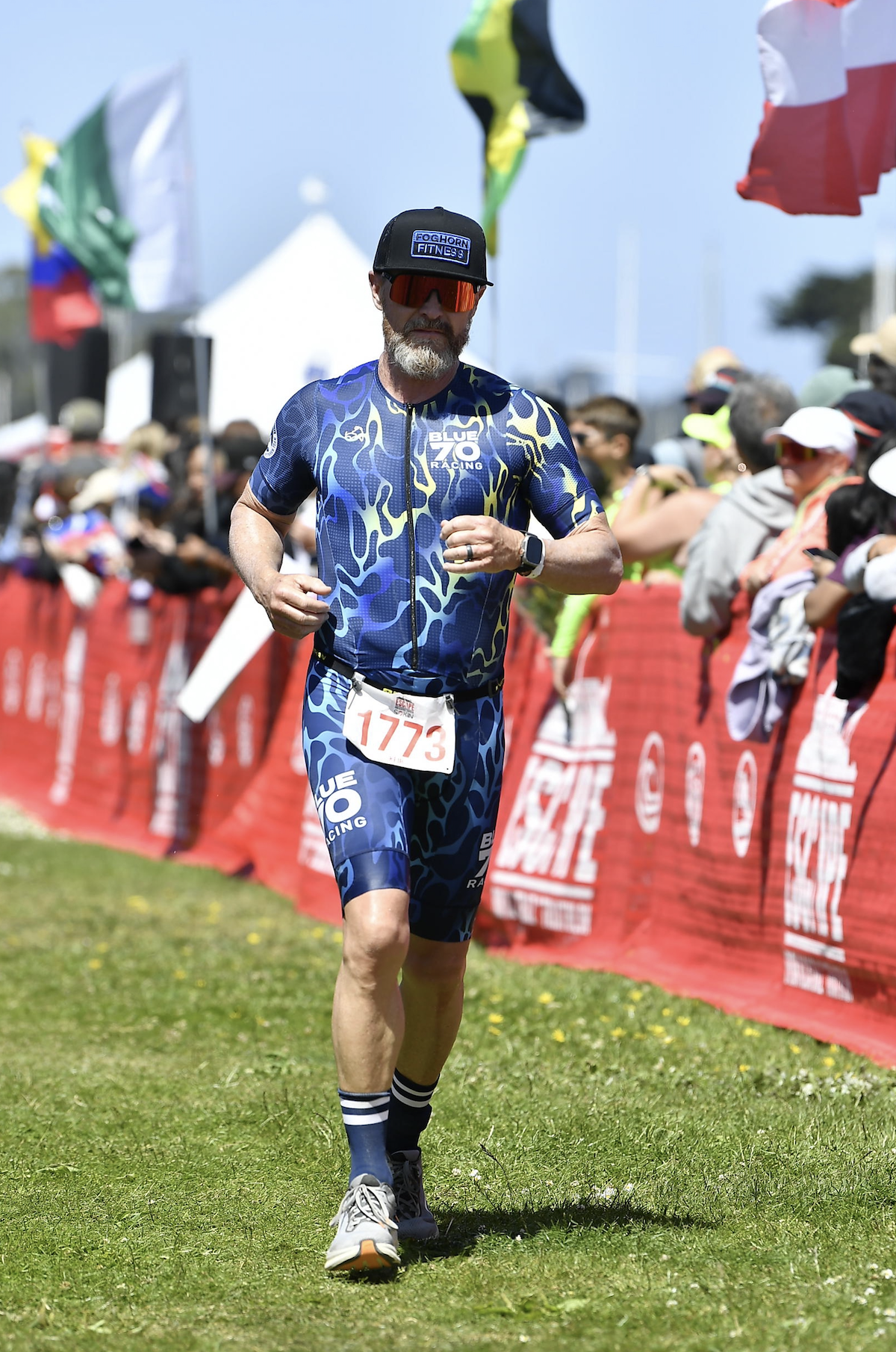
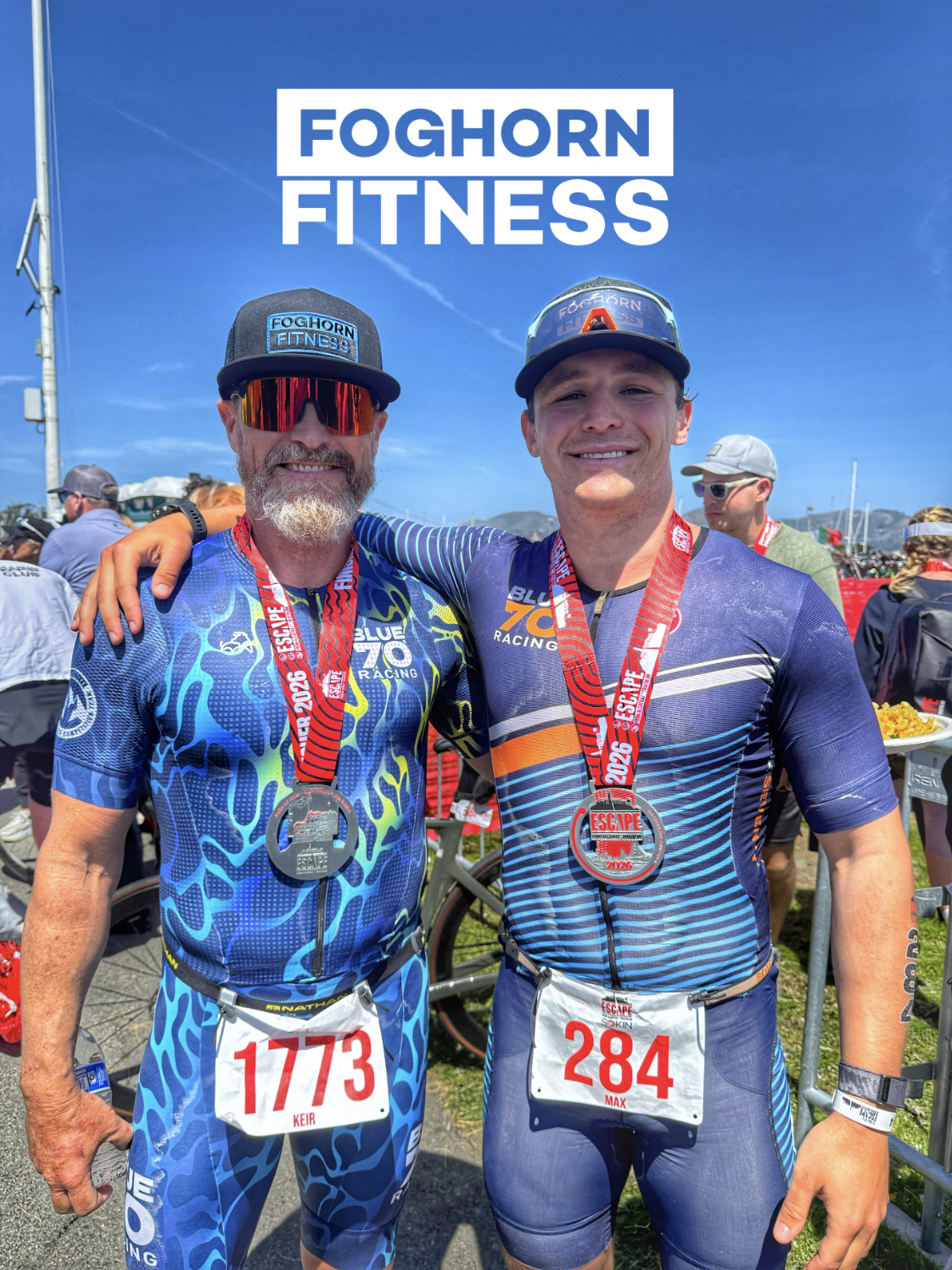
For me, that means triathlon. It means karate. It means being able to toe the start line at the Escape from Alcatraz, to show up for special trainings, to get smashed around on my surfboard, to keep doing the things that make me feel most alive at 57. The knee work — the Zone 3 cycling sessions, the VMO strengthening, the backward sled drags, the HA injections, the Voltaren, the Normatec, the sleep and nutrition discipline — none of it is the destination. It’s the price of admission for the life I want to keep living.
That’s what the Slowfit Method® is ultimately about. Not optimization for its own sake. Training as a means to a life fully lived. And the emerging science around OA — exercise as cartilage medicine, chondrocytes capable of becoming youthful again — tells us that life can be longer, more active, and more capable than we previously had any right to expect.
—
The Slowfit Method® Take
None of this surprises me from a Slowfit Method® perspective. What it does is give us a richer, more precise scientific language for what we’ve been building here.
The Slowfit Method is, at its core, a biological framework for human performance. We train because training creates adaptive signals. We treat sleep, nutrition, stress management, and recovery as pillars — not accessories — because your body is a system and every pillar affects every other one. We monitor training load and recovery state because the dose matters.
The emerging OA science adds a beautifully specific prescription: the active person navigating knee osteoarthritis should not back off. They should lean in — smartly, progressively, with heart rate guidance, with the other pillars in order. The goal is to provide the biological stimulus your cartilage needs, maintain the synovial fluid circulation that nourishes chondrocytes, and keep the systemic inflammatory environment as calm as possible while you wait — with genuine hope now — for the molecular therapies that may soon be able to do what no drug has ever done before.
Repair the joint itself.
More updates to come. In the meantime, keep moving. Your cartilage is counting on it.
—
Take the Slowfit Method® With You
If you want to put these principles into daily practice, the Slowfit Method® app is now available on iOS. Training guidance, recovery protocols, and the full Slowfit Method® framework — built into a tool you can use every day. I’ve been building this for a while and I’m genuinely proud of what it’s become.
Get the app
—
*Nothing in this newsletter constitutes medical advice. If you’re dealing with joint pain, please see a qualified sports medicine physician or orthopedic surgeon. The information here is intended to complement — not replace — professional medical guidance.
Questions, reactions, pushback? Hit reply. I read everything.
Keir
Foghorn Fitness
foghornfitness.com | foghornfitness.substack.com
—
Foghorn Fitness is home to The Slowfit Method® — a science-backed, whole-person approach to human performance. If someone forwarded this to you and you’d like to subscribe, we’d love to have you.
 The Lemonade Chronicles