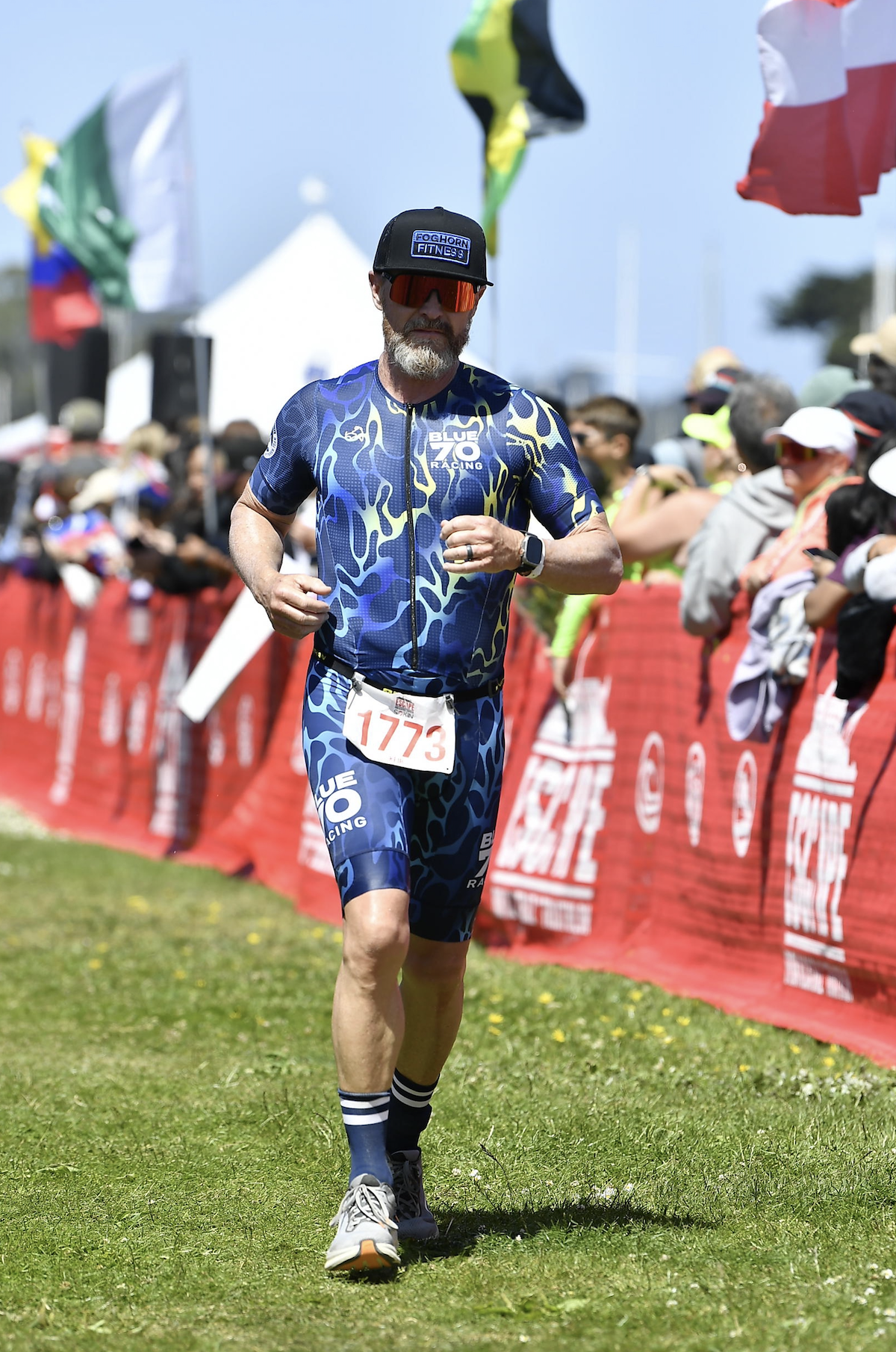
Triathlon

The Month Cartilage Science Changed Everything — And What It Means For Your Knees Right Now

A few weeks ago I wrote about my own knee osteoarthritis diagnosis — the swollen left knee that wouldn’t quit, the 30cc of fluid my orthopedic surgeon’s staff drained in his office, the Baker’s cyst, the MRI findings, the cortisone shot, the pending hyaluronic acid injection series. I promised updates as things developed.

Here’s the update: I just completed a multi-day karate special training. Strenuous, demanding, the kind of training that tests your entire body and your mind in equal measure. My knee is still not perfect. The inflammation is ongoing. And I did it anyway — not because I was reckless, but because the emerging science told me I should. And because I’m in the business of continuing to do the things that I love, that give my life meaning.

More on that in a minute.

First, I want to tell you about what has happened in cartilage science in the last several weeks. Because I think we are genuinely watching a paradigm shift in real time. And if you have osteoarthritis, or know someone who does, you need to understand what’s coming.

Three Pieces of Research. One Converging Message.

Let me lay out what’s happened in quick succession, because the timing is remarkable.

**Piece One: The Biological Framework (Howard Luks, MD)**

Howard Luks — sports medicine orthopedic surgeon, one of the most evidence-based voices in joint health — has been arguing for years that the conventional model of osteoarthritis is simply wrong. The “wear and tear” framing that leads patients to stop moving, stop loading, stop doing the things they love is not supported by the biology. As Luks writes, cartilage is a living, biologically active tissue that gets its nutrients from synovial fluid — and the only way synovial fluid circulates through cartilage is through compression and release. Load the joint, unload it, load it again. Movement nourishes cartilage. Inactivity starves it.

The primary driver of OA progression, Luks argues, is not mechanical grinding but chronic low-grade inflammation — specifically the cytokines IL-6 and TNF-alpha — that poisons the cellular environment where chondrocytes (cartilage-making cells) are trying to do their jobs. Your knee is downstream of your systemic biology. Everything that reduces your inflammatory load protects your joints.

This framing matters because it completely reorients what you should be doing about OA. Not resting. Not restricting. Training smartly, sleeping well, eating clean, managing stress — these are joint protection strategies, not just general wellness platitudes.

**Piece Two: The Exercise Intensity Study (Song & Meng, Medicine, May 2026)**

A randomized controlled trial published in Medicine in May 2026 put 120 patients with moderate knee OA (Kellgren-Lawrence Grade 2-3) into four groups: low-intensity aerobic exercise (50-60% heart rate reserve), moderate-intensity (60-70% HRR), high-intensity (70-80% HRR), or a control group. Three sessions per week, 30 minutes of treadmill walking or stationary cycling, continuously heart rate monitored, for 12 weeks.

The results were remarkable across every measure they tracked.

The high-intensity group saw a 28.5% drop in serum CTX-II — a direct biomarker of cartilage breakdown — over 12 weeks. The control group got slightly worse. On MRI, the high-intensity group increased medial cartilage thickness by 4.8% and volume by 4.2%. Pain dropped 52.5%. WOMAC scores — a comprehensive measure of OA pain, stiffness, and function — improved 45.3%. The 6-minute walk test improved by 71 meters, nearly triple the established threshold for clinical meaningfulness. 80% of high-intensity participants achieved clinically meaningful pain relief.

No serious adverse events. Zero dropouts due to exercise-related problems. These were people with moderate osteoarthritis exercising vigorously for 12 weeks.

Loading the joint did not thin the cartilage. It thickened it.

The dose-response data showed a threshold effect between 60-70% HRR where the benefit curve gets dramatically steeper. For most people, the sweet spot appears to be roughly 65-75% of heart rate reserve — vigorous but sustainable. The authors’ own conclusion: current exercise recommendations for knee OA patients are overly conservative, and many patients could safely tolerate and benefit from significantly more intense exercise than has traditionally been prescribed.

**Piece Three: The Stanford Breakthrough (Agarwal, Su, Ancel et al., Science, June 12, 2026)**

And then, just weeks after the Song & Meng paper, Stanford Medicine published what may be the most significant development in OA research in decades.

The study, published in Science, identified a single aging-related enzyme — 15-hydroxyprostaglandin dehydrogenase, which the researchers term a “gerozyme” because it accumulates with age and drives tissue degeneration — as a master regulator of cartilage aging. Block this enzyme, and something remarkable happens: existing chondrocytes undergo transcriptional reprogramming to a more youthful state. They don’t need to be replaced. They don’t need stem cells. They just need the aging brake released.

In aged mice, small-molecule inhibitors of 15-PGDH promoted cartilage thickening and regeneration of functional hyaline cartilage — the smooth, load-bearing kind, not scar tissue. The treatment reversed natural age-related cartilage thinning, improved joint function, and when administered after simulated ACL injuries, strongly mitigated post-traumatic OA progression and associated pain.

Most compellingly: human OA cartilage explants from total knee replacement surgeries — worst-case specimens, cartilage so degenerated it required surgical removal — showed decreased degradation markers and evidence of new articular cartilage formation when exposed to the 15-PGDH inhibitor in the lab.

And crucially, an oral version of the 15-PGDH inhibitor has already completed Phase 1 safety trials for age-related muscle atrophy. The safety profile is established. The path to a cartilage-specific clinical trial is shorter than starting from scratch.

Helen Blau, the Stanford researcher leading this work, put it plainly: “Imagine regrowing existing cartilage and avoiding joint replacement.”

Why This Convergence Matters

Three independent lines of research — a clinical framework, a randomized controlled trial, and a molecular biology breakthrough — landing in the same window, pointing in the same direction.

The old model: OA is irreversible mechanical wear. Cartilage grinds down. Rest what’s left. Manage pain until you need a new joint.

The emerging model: OA is primarily a biological failure — chronic inflammation, aging-related molecular brakes, a cellular environment that has become hostile to the very cells responsible for maintaining cartilage. And biological failures can be addressed biologically. Through exercise. Through systemic inflammation management. And potentially, soon, through targeted molecular intervention that allows your own chondrocytes to become youthful again.

This is not incremental progress. This is a paradigm shift.

The Caveats

I’m not going to oversell this, because we all deserve the full picture.

The Stanford study showed human cartilage regeneration in vitro — in a lab dish, not in a living human patient. Mouse-to-human translation in cartilage research has historically been difficult. The jump from promising preclinical results to clinical reality is where most breakthroughs stumble. Realistically, if the 15-PGDH inhibitor clears Phase 2 and 3 trials for cartilage regeneration, you’re probably looking at 3-5 years minimum before it’s available to patients. That’s fast by drug development standards. It is not imminent.

The Song & Meng study lasted 12 weeks with 120 participants. The authors themselves note that the short-term MRI cartilage changes may partly reflect alterations in cartilage hydration rather than true structural remodeling, and that longer-term studies are needed to confirm genuine tissue regeneration.

And the Luks framework, while compelling and well-supported, is still fighting against decades of conventional medical conservatism. Most orthopedic surgeons are still telling their OA patients to take it easy (including my own, sigh).

What I’m saying is: the direction of the evidence is clear and genuinely exciting. The clinical applications require patience.

What I’m Doing Right Now — And What You Should Consider

I want to share my own protocol, because I think it’s the most practical thing I can do.


**Exercise intensity as medicine.** Based on Song & Meng, my therapeutic target on the bike is 65-75% of heart rate reserve. With my resting HR of 45 and max HR of 175, that’s roughly 128-143 bpm — Whoop Zone 3, comfortably hard, sustainably challenging. Ideally three sessions per week, 30 minutes of work. This is the study protocol, and I’m treating it that way.


**VMO strengthening.** My MRI showed lateral patellar subluxation — my kneecap tracks too far to the outside, which is a primary driver of my patellofemoral OA and inflammation. Terminal knee extensions, backward sled drags (Kelly Starrett’s recommendation), and heavy standing bike climbs are my primary VMO tools. The patella tracks where the VMO tells it to. Strengthen the VMO, improve the tracking, reduce the grinding.


**Systemic inflammation management.** The Slowfit Method® pillars are not just training advice — they are, in the context of OA, direct joint protection strategies. Sleep quality, clean nutrition, stress management, lean body composition: all of these reduce the inflammatory cytokine load that drives OA progression. Every pillar is working in service of every other pillar.


**Voltaren topically, not Aleve systemically.** Topical diclofenac delivers NSAID-level anti-inflammatory action directly to the joint with roughly 6% of the systemic absorption of oral NSAIDs. Lower risk, more targeted. My default post-activity tool. I don’t love the idea of leaning on NSAIDs for anything, but as Kelly Starrett says, to stay ahead of the snowstorm, you’ve gotta sweep the front steps every hour. One of those sweeps, for me, is a little Voltaren.


**Normatec for lymphatic clearance.** Pneumatic compression after training sessions to move fluid and support recovery. Not a treatment — a recovery tool.


**The HA injection series coming next month.** Hyaluronic acid viscosupplementation to restore the joint’s natural lubricating environment before I start loading it with Starrett-level work.


**And the karate.** I just completed a demanding multi-day special training that would have been unthinkable six months ago when the knee was at its worst. Not pain-free, not without managing it carefully before, during, and after. But done. Because the evidence told me that movement is the medicine, fear of movement is the enemy, and an active 57-year-old with moderate patellofemoral OA who keeps training is doing more for his cartilage than one who sits on the couch waiting to feel better.


A Note on Howard Luks

I’ve reached out to Dr. Luks directly for his perspective on the Stanford study. His read on how the 15-PGDH research intersects with the exercise intensity data — and what it means clinically for active patients managing OA right now — is worth having. I’ll update this post or publish a follow-up when I hear back.

If you’re not already reading Luks’ Substack, you should be. He is one of the authentic, most honest voices in orthopedic medicine writing for a general audience today.

Why We Do This

The oft-cited Kelly Starrett — physical therapist, coach, mentor, and one of the clearest thinkers in the movement and performance space — talks about training in terms of “spending credits.” The idea is simple: we put in the work so that we can spend the credits on the activities we love. The training is not the point. The training is what makes the point possible.

For me, that means triathlon. It means karate. It means being able to toe the start line at the Escape from Alcatraz, to show up for special trainings, to get smashed around on my surfboard, to keep doing the things that make me feel most alive at 57. The knee work — the Zone 3 cycling sessions, the VMO strengthening, the backward sled drags, the HA injections, the Voltaren, the Normatec, the sleep and nutrition discipline — none of it is the destination. It’s the price of admission for the life I want to keep living.

That’s what the Slowfit Method® is ultimately about. Not optimization for its own sake. Training as a means to a life fully lived. And the emerging science around OA — exercise as cartilage medicine, chondrocytes capable of becoming youthful again — tells us that life can be longer, more active, and more capable than we previously had any right to expect.

The Slowfit Method® Take

None of this surprises me from a Slowfit Method® perspective. What it does is give us a richer, more precise scientific language for what we’ve been building here.

The Slowfit Method is, at its core, a biological framework for human performance. We train because training creates adaptive signals. We treat sleep, nutrition, stress management, and recovery as pillars — not accessories — because your body is a system and every pillar affects every other one. We monitor training load and recovery state because the dose matters.

The emerging OA science adds a beautifully specific prescription: the active person navigating knee osteoarthritis should not back off. They should lean in — smartly, progressively, with heart rate guidance, with the other pillars in order. The goal is to provide the biological stimulus your cartilage needs, maintain the synovial fluid circulation that nourishes chondrocytes, and keep the systemic inflammatory environment as calm as possible while you wait — with genuine hope now — for the molecular therapies that may soon be able to do what no drug has ever done before.

Repair the joint itself.

More updates to come. In the meantime, keep moving. Your cartilage is counting on it.

Take the Slowfit Method® With You

If you want to put these principles into daily practice, the Slowfit Method® app is now available on iOS. Training guidance, recovery protocols, and the full Slowfit Method® framework — built into a tool you can use every day. I’ve been building this for a while and I’m genuinely proud of what it’s become.

Get the app

*Nothing in this newsletter constitutes medical advice. If you’re dealing with joint pain, please see a qualified sports medicine physician or orthopedic surgeon. The information here is intended to complement — not replace — professional medical guidance.

Questions, reactions, pushback? Hit reply. I read everything.

Keir

Foghorn Fitness

foghornfitness.com | foghornfitness.substack.com

Foghorn Fitness is home to The Slowfit Method® — a science-backed, whole-person approach to human performance. If someone forwarded this to you and you’d like to subscribe, we’d love to have you.
How Seven Principles Changed the Way I Built My AI Coaching App

The Center for Humane Technology had a lot to do with it.

I’ve been following Tristan Harris and Aza Raskin at the Center for Humane Technology for years. If you’ve seen The Social Dilemma on Netflix, you know Tristan’s face and his argument: the tech companies that run our lives are not neutral platforms. They’re slot machines, engineered by very smart, very well-funded people to maximize one thing above all else. Not your health. Not your relationships. Not your sleep. Your time on device.

That argument is not new to regular Foghorn Fitness readers. I’ve written about it at length. The distraction pillars. The phone breakup series. The Johann Hari and Jonathan Haidt posts. I’ve been making the case for years that your smartphone is doing things to your attention, your sleep, your nervous system, and your relationships that you haven’t consented to and probably don’t fully understand.

And then I built an app.

Wait, what? 

I know. We’ve been over this. And a podcast episode I listened to yesterday clarified things for me in a way I hadn’t expected. CHT just released a new Your Undivided Attention episode in which Aza Raskin sits down with fellow CHT co-founder Randy Fernando to walk through their Seven Principles of Humane Technology. I want to take you through those principles — and then show you, specifically, how each one maps to the design decisions I made building the Slowfit Method® app.

Because this isn’t abstract. Every one of these principles shows up in the product.

First: What’s Actually Wrong With Most Tech

The episode opens with a clip from CHT’s very first podcast guest, cultural anthropologist Natasha Dow Schüll, who spent years studying casino design in Las Vegas. What she observed is the design logic behind modern slot machines: the goal is “time on device.” Everything is engineered to eliminate fatigue, minimize disruption, and keep you in the chair. Light doesn’t bounce at your eyes. Sound doesn’t jar your senses. The environment is calibrated to sustain your engagement indefinitely.

Raskin’s point: that’s exactly how your apps are designed. Not for your wellbeing. For time on device. Instagram, TikTok, YouTube, the news feed — different technologies, same broken ideology.

Raskin himself invented the infinite scroll, pre-social media. He watched it get weaponized against users and has spent the past decade trying to undo the damage. He estimates it wastes something on the order of 100,000 human lifetimes every week.

That’s the problem CHT’s seven principles are designed to solve. Here they are — and here’s how I applied each one.

Principle 1: Use a Complex Systems Lens

One of the big things that we miss a lot when we are dealing with technology is we don’t look at the whole system. We look at just one small piece of it and that means we don’t correctly understand what its effects are going to be and we don’t correctly understand how to fix the problems that we find. — Randy Fernando

The failure mode Fernando describes is optimizing for a single metric — engagement, time on site, daily active users — while ignoring what that metric does to everything else. YouTube optimized for watch time. The result was algorithmic extremism. You can’t see the damage from inside the single metric. You need to look at the whole system.

In the Slowfit Method® app, I deliberately refused to build around a single engagement metric. There are no daily active user dashboards driving product decisions. There are no A/B tests designed to squeeze more sessions out of users. The question I kept asking during development was not “how do we get people to come back?” It was: “what does a successful interaction actually look like?” The answer: the user got what they needed and went and did “the thing.” That’s the whole system I was trying to optimize for.

Principle 2: Protect the Systems We All Depend On

If you extract faster than something can regenerate, obviously that’s a problem. Technology is a huge exponentiator of that extraction process. — Randy Fernando

Fernando’s framework here is extraction vs. regeneration. Most tech extracts — attention, time, data, dopamine — faster than humans can regenerate. The result is depletion. Of attention spans. Of sleep. Of real-world relationships. Of the shared information environment we all depend on for democracy to function.

The Slowfit Method® is built around the opposite premise. Sleep, recovery, social connection, movement, mindfulness — every pillar is about replenishment, not extraction. I tried to build an app that reflects that. An hour on the app is an hour less of the things that regenerate you. So the app shouldn’t take an hour. It should take two minutes and send you back to the things that do.

Principle 3: Design for Genuine Thriving

A tool that’s designed for genuine human thriving will leave you stronger when you put it down than when you picked it up. — Aza Raskin

This is the principle most directly tied to the experience of using technology. Raskin puts it simply: when you put your phone down after an hour on it, do you feel better or worse? When you wake up the morning after a late-night scroll session, do you feel better or worse?

Fernando connects the anti-AI sentiment building in the culture to this principle’s absence. Students booing AI at commencement speeches. Parents pulling kids off platforms. Communities organizing against data centers. That resistance isn’t coming from people who’ve read ethics papers. It’s coming from people who can genuinely feel that something is wrong.

What they’re feeling, Fernando argues, is the absence of this principle. Technology built to extract attention, replace labor, and harvest data rather than to genuinely serve the humans using it.

When I designed the Coach Keir AI interface, I wrote this into the system prompt: the AI should never try to extend the conversation beyond what’s useful. It should give direct answers. It should end responses with a single action item. It should tell you to put the phone down. Literally. You saw the screenshot in an earlier post: “Your move: Phone face down across the room. Lights out. Start breathing.” That’s designing for genuine thriving.

Principle 4: Align Incentives with Human Wellbeing

The fourth principle is about business models. Most tech companies have a fundamental misalignment: they make money when you use the product more, not when you’re healthier, better rested, or more connected to the people in your actual life. That misalignment is structural. It’s not fixed by good intentions. It’s fixed by changing the incentive.

The Slowfit Method® app runs on a subscription model. I make money when people find enough value to pay for ongoing access to the Vault — 270+ books, podcasts, tools, and on-demand workouts — not when they spend more time banging around for hours in the chat interface. That changes what I’m actually optimizing for. I want the free Coach Keir AI interactions to be so useful and so direct that people think “this person’s deeper knowledge base is worth paying for.” Not “I can’t stop using this.”

Principle 5: Foster Autonomy and Agency

Inhumane tech exploits psychological vulnerabilities. Variable reward schedules. Social comparison. FOMO. The fear of missing out on what everyone else is seeing right now. These are not neutral design choices. They are deliberate mechanisms for hijacking your decision-making and substituting the algorithm’s agenda for your own.

I built the anti-version of this into every layer of the app. No infinite scroll. No push notifications designed to pull you back. No streak mechanics that make you feel bad for not opening the app three days in a row. No social comparison features. The Coach Keir AI is explicitly designed to be anti-sycophantic — it will tell you what you need to hear, not what you want to hear. Autonomy means you get accurate information and make your own decisions. That’s what I want the app to support.

Principle 6: Ensure Accountability and Transparency

This one is personal. When you open the Coach Keir AI, the first thing you see is a banner: “AI-generated responses. Coach Keir AI is not a licensed medical professional. Emergencies: 911. Mental health crisis: call/text 988.”

That’s not a legal disclaimer buried in the terms of service. That’s the first thing you see, every time, in the primary interface. Because transparency about what the technology is and isn’t matters. The AI is trained on my writing and my methodology. But it is not me. It is not a therapist. It is not a doctor. It is a tool. I wanted users to know that before they typed their first message.

I also published Substack posts about the app’s design philosophy before and again after I published anything about its features. One about why I built it to not be addictive. Another about the ethical decisions baked into the system prompt: the anti-sycophancy rule, the distress routing protocol, the nudge toward real human coaching. Accountability means making those decisions visible, not hiding them in the product.

Principle 7: Build for the Long Term

The final principle is the hardest one for most tech companies because the market actively punishes it. Fernando uses car safety as his example: the automakers weren’t excited about investing in safety until cultural pressure, regulation, and changed incentives forced them to. The same transformation needs to happen in tech.

I think about this principle in terms of the Slowfit Method® itself. The whole framework is built around the long game. Not the fastest result, the best result over time. Not maximum intensity, optimal sustainable load. Not the biggest Strain Score number on your Whoop this week, the best recovery over the next twenty years.

The app is an expression of that philosophy. I’m not trying to maximize short-term engagement metrics. I’m trying to build something that is genuinely useful to people over time. Something that, in a year, someone might say: that app didn’t try to take over my life. It helped me understand mine a little better. Actually helped me improve things. And then it got out of the way.

Why This Matters Right Now

I am not under any illusion that a single human performance coach bumping along towards 100 app downloads over two weeks in San Francisco is going to single-handedly reform the tech industry. That’s not the point.

The point is that the principles exist. They’re not idealistic. They’re not impractical. They’re a checklist that any builder of any product — at any scale — can apply. And I applied them. Imperfectly, with limited resources, in a space dominated by products that ignore all seven.

Raskin ended the episode with something that stuck with me. He said you know a system is humane when it is protecting the thing that it depends on. Ask yourself: has social media made democracy stronger or weaker? Has the infinite scroll made your attention stronger or weaker? Has the algorithm made your relationships stronger or weaker?

The answers are obvious.

Now, after spending a little time kicking the tires on my little app, ask: has the Slowfit Method® made my health stronger or weaker? Has Coach Keir AI made my sleep better or worse? Has this app left me more capable or less?

Those are the right questions. They’re the only questions, I’d say. I hope you’ll make a little bit of space in your life for this app. I promise it’ll help. 

And maybe go listen to the Your Undivided Attention episode. It’s 52 minutes and it’s worth every one of them.

Stick around.

Best,

Keir

P.S. The app is free to download. Coach Keir AI is available to all users. The full Vault unlocks with a paid subscription. Download here.

P.P.S. Want to work through any of this with a real human coach, as in, me? Book a session at foghornfitness.com.

P.P.P.S. Paid Substack subscribers get the deeper dives and the full resource library. Upgrade here.

P.P.P.P.S. All ten pillars of the Slowfit Method® at foghornfitness.com.

Five-Second Rule? How about the Five-Year Rule??

ImageMy Facebook feed this morning delivered up a post by Outside Magazine, citing a New York Daily News article, that reported on a recent study from researchers at Ashton University in the UK.  The Six Degrees of Kevin Bacon point?  It turns out the amount of time a morsel of food spends on the ground bears a direct correlation to whether you should pick up the morsel and eat it.  Interesting study.  Interesting conclusion.  Good to know. 

I think the researchers set their sights too low, however.  They apparently stopped the clock at 30 seconds of floor contact.  I think they should have measured the bacteria count after a number of years, forget about seconds.  And the hypothesis tested should be the point after which the discarded or forgotten or newly-discovered morsel will kill the prospective eater. 

That sweet photo of the pudgy-toed toddler and upside down ice cream cone in the photo above, smartly deployed by Outside Magazine courtesy of Getty Images?  That’s nothin’.  I don’t know any parent who hasn’t dealt with that kind of pedestrian incident, walking down a dark, gum-spot covered sidewalk, not even breaking stride.  The sand or topsoil or even minute shards of glass just make the ice cream treat all the more unique.  Kidding about the glass shards.  I think.

I’m more interested in whether the energy gel I recently ate will make me drop dead while mashing it up in my mouth, or maybe give me gangrene of the belly in a few hours or days. 

You see, in a pinch, I will eat just about anything.  This is the case mostly due to the fact that I’ve been burning (a slow burn, mind you) through running shoes, bike seats, and swim goggles for 15 or 16 years now.  Upon leaving private law practice, I took up representing some professional endurance athletes, helping them with sponsorship and such.  And soon thereafter, I bought a local marathon.  That meant that I had access to storage lockers full of Zone Perfect bars, PowerBar gels, Clifbars, Clif Shots, Accelerade, Sport Beanz, Endurox, and bags and bottles full of dozens of products I simply can’t bring back to mind all these years later.  All this stuff basically fueled my mediocre competitive triathlon “career” as an age grouper.  For longer than my kids have been alive.

And it’s all gone.  The piles of boxes are long gone.

Except for the occasional bar or gel or bean or powder in a Ziploc bag that I’ll scrape from the bottom of a backpack I’ve unearthed in the back of a closet.  Or scooped out of my older son’s bedside table drawer, chocked full of goodies from when the drawer belonged to me.  Or stuffed into the pocket of a jacket I haven’t worn for years. 

Example. I used to love the “green apple” gels that PowerBar made.  I had a ton of those from, oh, maybe 2001.  As I recall, they had some sort of caffeine or similar ingredient in there.  I made the mistake of leaving a few unopened packs on a shelf in my garage after a long bike ride around the 2001 time frame.  A day or two later, I discovered that some mice had themselves discovered that they too enjoyed the green apple gels.  The telltale nibble marks, the speck-sized mouse poop scattered about.  There is no warning label on the gel packets regarding proper consumption amounts for vermin, or that the gel is not intended for vermin.  But I can tell you there should be. 

A section of the garage was practically ripped apart by that mouse or mice all hopped up on the green apple gel.  The evidence of the mouse or mice activity suggested that the critters leapt with super-human (super-vermin?) powers, accessing high spaces and walls in a way that was just not normal. That little bastard or those little bastards pretty much destroyed the last of those green apple PowerGels.  And I think they paid the ultimate price, most likely.  Tweaked out after a few hours of their caffeine-addled manic behavior, simply expiring in a little heap in one hole or another somewhere.  Spent.

Serves them right.  And fortunately, they didn’t find all of my green apple gel stash.

I found one of these wonder gels just the other day, in a red and grey Timbuk2 messenger bag that saw regular circulation years ago as Max’s diaper bag.  Max is now 12.  I spied in a weird little pocket the gold-tinted packet, the green apple graphic, and I couldn’t resist.  Mostly, I was pressed for time, trying to squeeze in a compressed bike ride with a neighborhood buddy who was equally squeezed for time. I ripped the foil with my teeth, squeezed the paste (yes, it would no longer be accurate to call the texture “gel”) onto my tongue, and flattened out the packet to ensure that I got everything out.  My reptilian brain was screaming “NO EAT! NO EAT!” throughout this entire fifteen second episode, mind you.  I ignored it.

The ride was fine.  I suffered no ill effects from the gel, at least not yet.  And the really green apple paste served its purpose, as far as I can tell.  But my sample size was small.  The study was neither double-blind nor peer-reviewed.  So of limited scientific value.

So, to you researchers at Ashton University:  Thank you for the information.  But for your next study, may I suggest that you put away the stopwatch, and pull out the calendar?  Ideally a calendar that shows 10 or more years “at a glance”?  I may have another green apple gel or two around here somewhere, if you need something to test….

Thanks for reading.