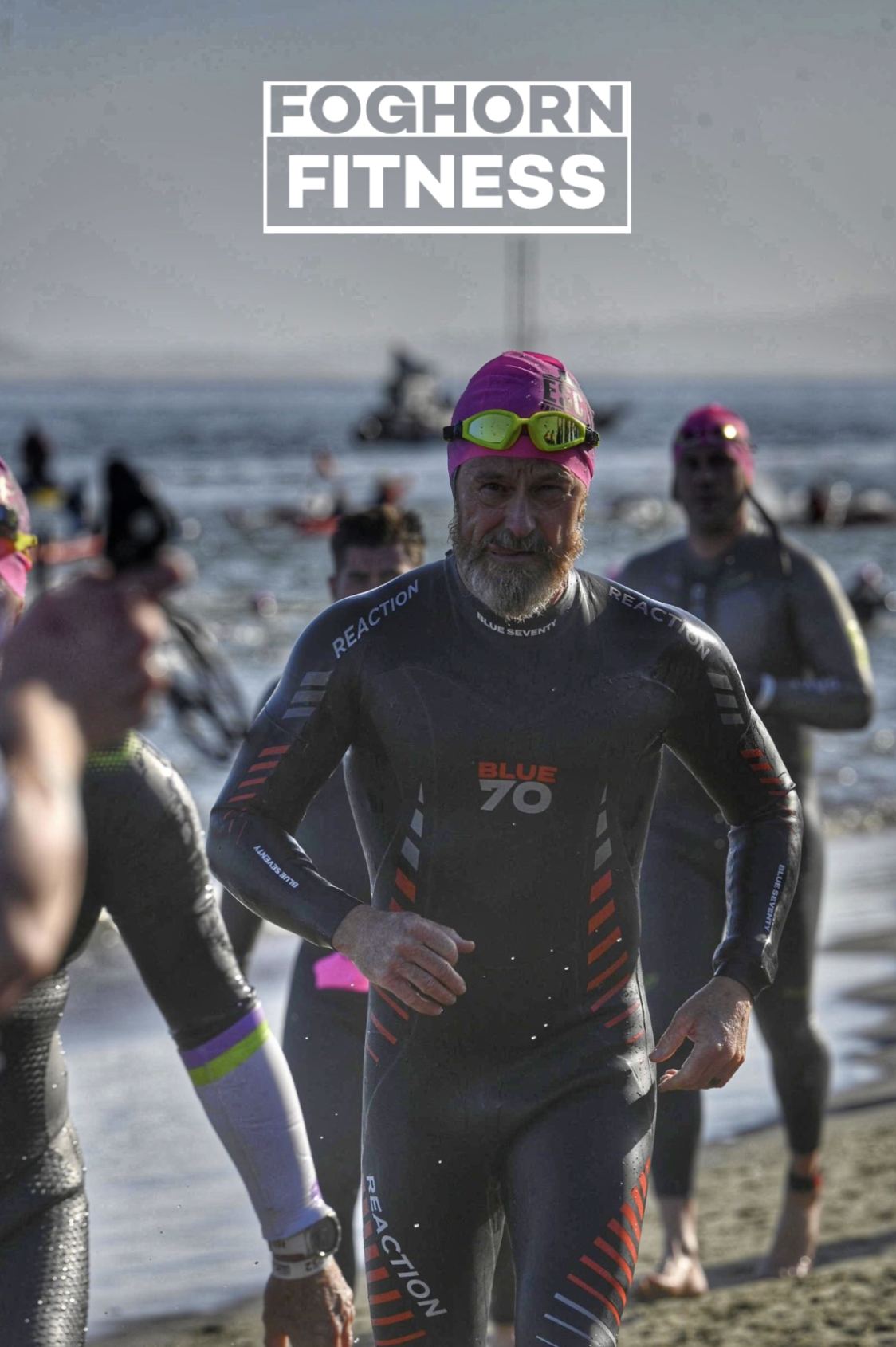
human performance

The App I Built Is the Opposite of Everything I’ve Been Warning You About

“This phone is the devil”

— a childhood friend, via text, this morning

He’s getting off Instagram. Can’t say I blame him.

I’ve spent years writing about your phone. Specifically, about what it’s doing to you. (And to me.)

In January 2024 I wrote about Johann Hari’s Stolen Focus and the trillions of dollars arrayed against your ability to pay attention. In February 2024 I went deeper on why it’s so hard to focus — the dopamine dependency, the slot-machine mechanics, the infinite scroll engineered to exploit our evolutionary hard-wiring. In October 2024 I wrote about Jonathan Haidt’s The Anxious Generation and what the smartphone has done to our kids. And before all of that, Cal Newport’s Digital Minimalism convinced me to deliberately downsize my iPhone use, strip the social media icons off my home screen, and mute the notifications pulling my attention toward that hunk of plastic and glass in my pocket.

The research is clear. Maggie Jackson, in Distracted, put it as starkly as anyone: with our attention scattered among the beeps and pings of a push-button world, we are cultivating a culture of distraction and detachment.

I didn’t just write about this stuff. I lived it. A while back I documented my own month-long attempt to break up with my iPhone — the rubber band around the phone, the grayscale screen mode, a Giants game where I didn’t look at a screen once (one of my prouder moments). The whole messy field report is in the Phone Breakup series if you want to go down that rabbit hole. The short version: it’s hard, it’s worth it, and I failed more than I succeeded. But I kept trying.

And then I went and built an app.

I know.

Here’s the Thing I Had to Reconcile

When I first started thinking seriously about building the Coach Keir AI app, I had a problem. Not a technical problem — that was my developer Alex’s department. Rather, I had to address a philosophical one.

I had spent years making the case that our smartphones are attention-harvesting machines designed by very smart, very well-funded people to keep us glued to screens as long as humanly possible. I had written about Anna Lembke’s Dopamine Nation and the way pleasure-seeking loops get forged into deep neural grooves. I had cited the Center for Humane Technology and Tristan Harris’ warnings about what engagement-maximizing technology is doing to human cognition. I had recommended Catherine Price’s How to Break Up with Your Phone to pretty much every athlete I coach.

And I was about to add another app to the App Store?

The only way I could do it in good conscience was to build the opposite of what everyone else was building.

So that’s what I did.

What “The Opposite” Actually Looks Like

No infinite scroll. No push notifications engineered to pull you back. No streaks. No engagement metrics. No algorithmic filler designed to keep your eyes on the screen.

The app gives you what you need and sends you back to your life. That’s the design spec. Use it as a springboard, not a slot machine. Remember Patagonia’s famous “Don’t Buy This Jacket” ad in The New York Times? Same energy. I want you to use this app. I also want you to use it for two minutes and then go to sleep.

Speaking of sleep.

Meet “Julie”

One of my longtime Foghorn athletes — I’ll call her Julie — has a bedtime habit that will be familiar to a lot of you.

She gets into bed at 10:30. She picks up her phone to “check one thing.” An hour later she’s still on Instagram, heart rate quietly elevated, nervous system humming, cortisol doing what cortisol does when you’ve been consuming a high-speed feed of other people’s highlight reels for 60 consecutive minutes. She falls asleep somewhere around midnight. Her Whoop recovery score the next morning is dismal. She’s groggy, short-tempered, and reaching for an extra cup of coffee by 9 a.m.

We’ve talked about this in our sessions. A lot. She knows the science. She’s read the posts I’ve sent her. She knows that the blue light from her phone suppresses melatonin, that the emotional arousal of social media keeps her sympathetic nervous system activated exactly when she needs to be downregulating, that the unpredictable reward schedule of Instagram is the same mechanism that keeps people at slot machines.

Knowing isn’t the same as doing.

So a couple weeks ago I told her to try something different. Instead of reaching for Instagram when she gets into bed, open the Coach Keir AI app and type in what she’s feeling.

Here’s exactly what Coach Keir said:

Julie, put the phone down right now. Instagram at 10:30pm is gasoline on the anxiety fire — the algorithm is literally designed to keep your nervous system activated. I know it feels like comfort but it’s the opposite.

Here’s your downregulation breathing protocol. Do this right now: Close your mouth. Keep it closed throughout. Start with a quick body scan from head to toe — wherever you find tension (jaw, shoulders, chest), let it dissolve on your exhales. Now breathe:

• 4 counts in through your nose, belly-led

• 8 counts out through your nose, slow and controlled

• No aggressive pauses, circular and gentle

• When your mind wanders to work anxiety, gently bring it back without judgment — no self-criticism, just return to the breath. The extended exhale is the physiological key — it directly activates your parasympathetic nervous system. Your body cannot stay in fight-or-flight with a long nasal exhale. This isn’t woo, it’s autonomic nervous system science. Do this for 5 minutes. Then finish with one big inhale all the way to the top, slight hold, then the longest possible nasal exhale you can sustain. That final exhale is your reset.

One more thing: If you want guided support for this, Headspace has excellent sleep meditations that pair perfectly with this protocol. It’s the only meditation app I use and endorse. Your move: Phone face down across the room. Lights out. Start breathing. You’ve got this Julie. Goodnight.

Two minutes to read that. Five minutes to do the breathing. She was asleep by 10:45. That’s not a miracle. That’s a tool.

The Irony Is Intentional

Yes, this requires using a phone to stop using a phone. I get it. That’s a real tension and I won’t pretend otherwise.

But here’s what I’d offer: the problem was never the device. It’s what the device is typically used for. Instagram, TikTok, and the news feed are engineered for maximum engagement. A breathing protocol is not. One is a slot machine. The other is a tool.

Catherine Price’s framework — ask yourself “What for? Why now? What else?” before you reach for your phone — is the right instinct. Most of the time, the answer to those three questions is damning. But occasionally the answer is: I need a downregulation protocol so I can sleep. And for that, a phone can actually help.

The Slowfit Method® has always been about intentional choices. Being deliberate about how and why we are living our lives, rather than just pouring more water into a glass that is already overflowing and hoping for the best. The app is the method in your pocket. Use it intentionally. For two minutes. Then put it down.

That’s the whole pitch.

Download My App

What “Julie” Said Last Week

“Honestly? I forget sometimes and I end up on Instagram anyway. But when I remember to open the app instead, I’m asleep in under 15 minutes. When I don’t, I’m awake until midnight and I hate myself a little.”

Not a case study. Not a controlled trial. Just a Foghorn athlete who found one thing that works slightly better than the thing that wasn’t working.

Which is more or less what the Slowfit Method® is for.

My buddy from childhood is getting off Instagram. Good for him.

The phone doesn’t have to be the devil. But it’s up to us to make sure it isn’t.

Stick around.

Best,

Keir

P.S. The app is free to download. Coach Keir AI is available to all users. The full Vault — 270+ books, podcasts, tools, and on-demand workouts — unlocks with a paid subscription. Download here.

P.P.S. Want to work on sleep, distraction, or any other pillar of the Slowfit Method® with a real human coach? That’s what the 1:1 work is for. Book a session at foghornfitness.com. I have availability. Hit that button.

Book a Session

P.P.P.S. Paid Substack subscribers get the deeper dives and the full resource library behind every pillar. Upgrade here.

P.P.P.P.S. The new Foghorn Fitness site just launched. All ten pillars, the full method, everything in one place. foghornfitness.com.
I Asked My Own App for Help. Here’s What It Said.

A dispatch from the edge of new puppy ownership.

It is 8 a.m. I have already been awake for hours.

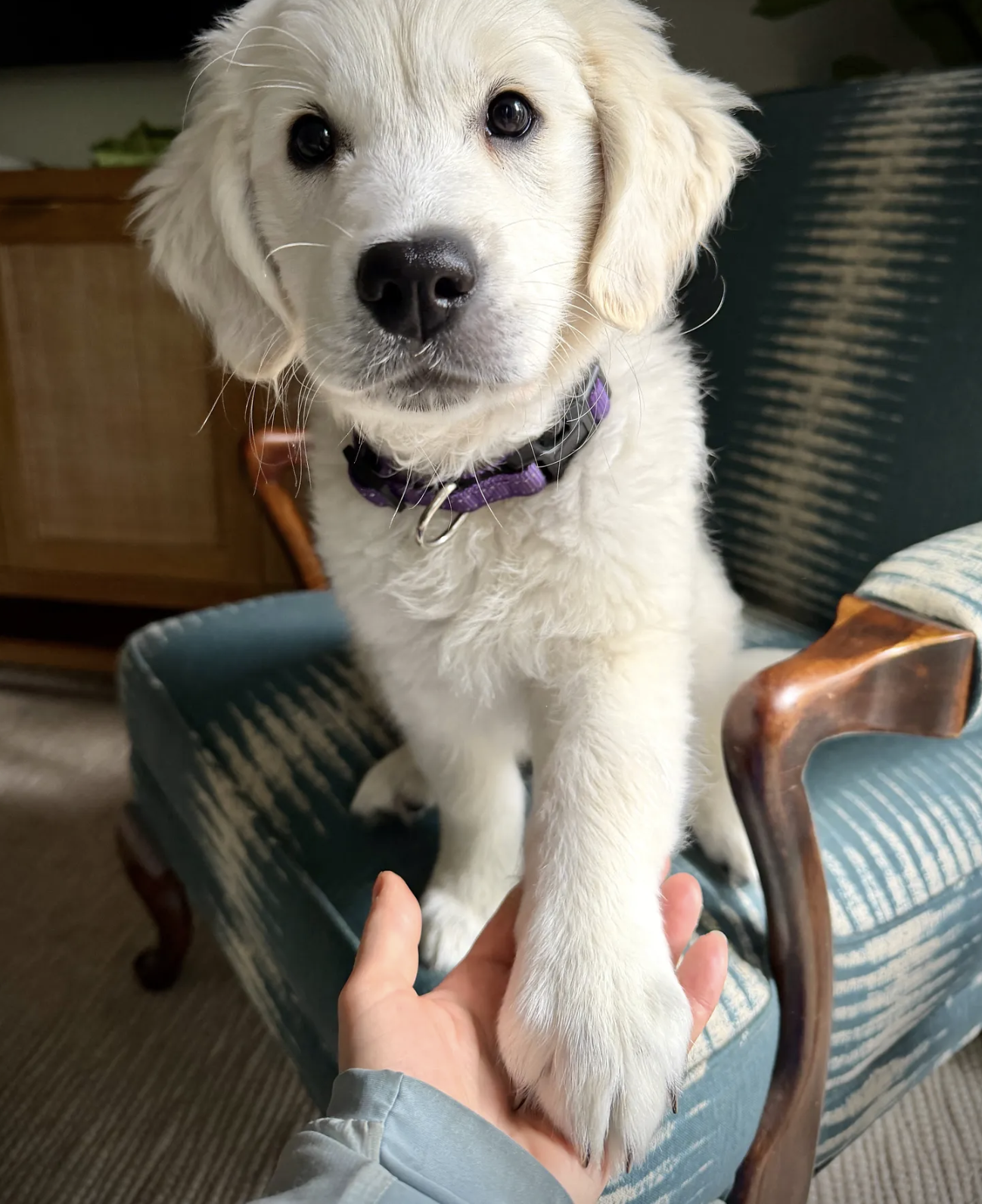
Meet Ellie. She is a puppy. She is adorable.

She is destroying me.

I want to be clear about something. I am a human performance coach. I have spent years building a ten-pillar framework for maximizing health and happiness. I teach people how to manage stress, optimize sleep, build resilience, regulate their nervous systems. I have a registered trademark, for crissakes.

And I am currently being defeated by a creature who weighs less than my lightest kettlebell.

So I did what I’ve been encouraging all of you to do. I opened the Coach Keir AI app and typed in my problem.

“I’m struggling with the stress of parenting a new puppy as a full time job, on top of my full time job.”

I want to share exactly what it said. Verbatim. Because it’s better than anything I would have written at that hour…

What Coach Keir Said: Round One

The first response named what was actually happening:

KJ, welcome to the puppy tax — the hidden cost nobody warns you about. Sleepless nights, constant vigilance, zero personal space, and a tiny furry creature who has absolutely no idea what you’re going through. It’s basically a newborn who will eventually chew your furniture.

Here’s what’s actually happening physiologically: you’re running a chronic stress response. Interrupted sleep alone tanks your cortisol regulation, impairs decision-making, and reduces emotional resilience. Add constant unpredictability (will she destroy something while I’m on this Zoom call?) and your nervous system is on high alert all day. That’s exhausting.

Immediate tools from the Slowfit toolkit:

First, your breathing. When the puppy stress spikes, do a quick downregulation reset: mouth closed, 4-count nasal inhale, 8-count nasal exhale. Repeat for 3-5 minutes. That extended exhale is a direct dial into your parasympathetic nervous system — it physiologically cannot stay in fight-or-flight mode with a long exhale. Do this during any quiet moment, even while the puppy naps.

Second, protect your sleep ruthlessly. Also grab a Manta Sleep mask with this link — blackout sleep is non-negotiable when you’re already sleep-deprived.

Your move today: Do that breathing protocol right now, then schedule one 20-minute walk — just you, no puppy. Your nervous system needs a reset.

What’s hitting hardest — the sleep deprivation or the constant unpredictability?

I answered: the sleep deprivation. And the follow-up was even better.

Round Two: The Neuroscience of Running on Empty

KJ, what you’re describing is textbook — and it’s not a character flaw, it’s neuroscience. Sleep deprivation doesn’t just make you tired, it literally impairs your prefrontal cortex (the rational decision-making part of your brain) while simultaneously amplifying your amygdala (the emotional alarm system). You’re essentially driving with no brakes and a heavy accelerator.

Dr. Lisa Feldman Barrett’s work is essential here — her book How Emotions Are Made explains exactly what’s happening to you. Her “body budget” model is brilliant: sleep, nutrition, exercise, and social connection are the bedrock of emotional stability. When sleep is depleted, your brain’s predictive emotional processing goes haywire — it starts catastrophizing and overreacting because it literally doesn’t have the resources to regulate properly. You’re not overreacting because you’re weak. You’re overreacting because your brain is running on empty.

Practical interventions right now:

Protect whatever sleep you’re getting ferociously. Same wake time every single day — even weekends, even after bad nights. This anchors your circadian rhythm when everything else feels chaotic. Grab a Manta Sleep mask and get Momentous Magnesium Threonate (with code foghorn) — it crosses the blood-brain barrier and meaningfully improves sleep quality.

Track your recovery with Whoop — join Team Foghorn Fitness free. When you can see your actual recovery data, you stop guessing and start making smarter decisions about when to push and when to protect.

Your move today: Set one non-negotiable sleep boundary tonight. What time does the puppy allow you to be in bed?

The resource tiles that surfaced below the response: Dr. Alia Crum’s Science of Mindset podcast, the Wim Hof Method book, Full Catastrophe LivingHow Emotions Are MadeHope for Cynics. Every one of them relevant. Every one of them something I personally put in the Vault.

Why I’m Showing You This

I’ve published three posts about this app. One about the features. One about why I designed it to not be addictive. One about the ethics of building AI for human performance.

This is the post I should have written first.

The app is not impressive just because of its feature set. It’s useful because at 8 a.m., when I’m running on fragmented sleep and have a full day of coaching ahead, it gives me fast, direct, specific access to the synthesized thinking of someone who has spent years studying this stuff.

That someone is me. Which means I’m getting my own best thinking back when I’m too depleted to access it myself.

That’s a strange and genuinely useful thing.

A few things I want to flag about that exchange, because they matter:

• It called me KJ. Not Coach Keir, not Keir, not “I understand you’re struggling.” It knew who it was talking to—because of a few questions in the onboarding process— and it was direct.

• It named the physiology immediately. No sympathy spiral. No “that sounds really hard.” Here’s what’s actually happening in your nervous system. Here’s why.

• The affiliate links surfaced organically. Manta Sleep mask, Momentous Magnesium, Whoop — these are products I actually use and recommend. They appeared because they were relevant, not because an algorithm was optimizing for commission.

• It ended both responses with a single, specific action. Not a list of ten things. Not an attempt at endless dialogue to artificially increase engagement. One move. Today.

• It asked a follow-up question. It didn’t assume. It narrowed toward what I actually needed. Then it sent me on my way.

That’s what “trained on my methods” actually means in practice. Not a chatbot that has read some random fitness content. A coaching interface that reflects a specific philosophy about how to help people, built from years of my writing, research, and direct work with athletes.

You don’t have to have a puppy. You can have a deadline, a training plateau, a sleep score trending the wrong direction, a knee that won’t cooperate, or just a week when everything feels like too much.

That’s what this app I built is for.

OK. Ellie is ramping up for another loud barking session in her puppy zone at the moment, looking for attention. I’m going to do the breathing protocol right now.

Best,

Keir

P.S. The app is free to download. Coach Keir AI is available to all users. The full Vault — 270+ books, podcasts, tools, and on-demand workouts — unlocks with a paid subscription. Download here.

P.P.S. If you’re dealing with something the app can’t fully address — an injury, a major life transition, or you just want a real human in your corner — that’s what the 1:1 coaching is for. Book an intro session at foghornfitness.com.

P.P.P.S. All ten pillars of the Slowfit Method® live here on Substack. Paid subscribers get the deeper dives and the full resource library. Upgrade here.

P.P.P.P.S. Photo credit to my pal, Jana Ašenbrennerová.

What Do You Want Written on Your Tombstone?

I know. Dark opener for a fitness newsletter, right?

Bear with me.

This is the first in a series of deep dives on the ten pillars of the Slowfit Method®. My framework for being as healthy and happy as possible, developed over thousands of hours of coaching, reading, and frankly experimenting on myself and anyone who’d let me. If you’re new here, the full method is at foghornfitness.com — worth a look before or after you read this.

I’m not kicking off with a workout. Not with a supplement protocol. Not even with a breathwork technique, though that’s coming.

I’m starting with a question about your funeral.

Because everything else flows from the answer.

Pillar #1: Purpose

When I designed the Slowfit Method®, I had to decide where to start. Ten pillars, each important. But one has to come first.

The answer was obvious: If you don’t know why you’re here, nothing else is oriented correctly. You can optimize your sleep, nail your Zone 2 training, build a meditation practice. And still feel like you’re running on a treadmill going nowhere if the whole machine isn’t pointed toward something that matters to you.

So we start with purpose. Your mission. Your reason for being.

Your answer to: Why am I here? And most of us have no idea. That’s OK! Keep reading, let’s see if I can help get you there, or at least pointed in the right direction.

The Tombstone Exercise

World-renowned performance psychologist Dr. Jim Loehr has spent his career thinking about exactly this. His book Leading with Character: 10 Minutes a Day to a Brilliant Legacy puts it plainly: at the end of your life, people won’t be praising your money, your title, or your status.

They’ll remember your character. What you gave. How you made them feel.

Loehr’s companion piece, The Personal Credo Journal, walks you through the hard work of crystallizing your life’s purpose. Prompts like: What are the major themes in your life? What words describe you at your best? At your worst? Are you more of a giver or a taker?

I’ve been working through the journaling myself. I won’t pretend it’s comfortable. Nor that I’ve got this thing dialed. I basically find myself disappointed in myself about something I’ve done or not done every single day. But I’m developing a much clearer sense of what I’m actually meant to be doing here. And that clarity is making me more intentional about how I spend my time. The things I choose to do that serve my purpose. The things I choose not to do that don’t. Where I direct my focus and attention (and where I don’t).

I’m also mindful here of Tsutomu Ohshima, the founder of Shotokan Karate of America (the school to which I belong), who famously said: “We must look at ourselves with the strictest eyes.” That’s the work. Not brutal self-criticism. Clear-eyed self-knowledge. Being honest with yourself, no BS. You don’t need to be a karate-ka (though it helps!) to appreciate this one.

This is why Pillar #1 is Purpose. Not double-unders. Not red-faced Tabata on a spin bike. In fact, this heavy topic is something I’ll address with new Foghorn athletes fairly early in a new training relationship. Because everything else flows from there.

Arthur Brooks on Happiness and the Second Curve

A book I kept coming back to while developing this pillar: Arthur C. Brooks’ From Strength to Strength: Finding Success, Happiness, and Deep Purpose in the Second Half of Life. Brooks is a Harvard professor, social scientist, and The Atlantic’s happiness columnist.

The book resonated with me personally. It helped put into perspective my own career arc. Big firm litigator to sports entrepreneur running a major big wave surfing contest to human performance coach. On paper, this doesn’t look like a clean trajectory, does it?

Brooks’ framework made sense of it.

As we age, our “fluid intelligence” naturally diminishes. The dynamism, the raw idea generation, the ability to out-grind everyone in the room. That fades.

But our “crystallized intelligence” rises. The ability to draw on a lifetime of experience, synthesize knowledge, teach, and mentor. If you can let go of your attachment to the first curve and lean into the second, you’re on the road to a different kind of success. And a much deeper kind of happiness.

This is where I’ve landed. I’m here to share what I’ve learned (and continue to learn). This is my purpose, and in it I’ve found a sense of peace.

Brooks defines happiness not as a feeling but as a combination of elements: enjoyment, satisfaction, and purpose. That third ingredient is the one most people skip. We optimize for enjoyment. We track our accomplishments for satisfaction. But purpose is the ballast. Without it, the good days feel thin and the hard days feel bottomless.

His prescription is strikingly aligned with what I built the Slowfit Method® around. Detachment from empty rewards. Genuine service to others (like you!). Deep relationships. Some form of contemplative practice.

Not hustle more, achieve more. That’s an endless treadmill. Instead be thoughtful—mission-focused—along the way. And slow down, go deeper, figure out what actually matters. Focus your efforts on that.

What the Science Says

Just like everything else I write about here, this isn’t soft stuff. The research treats purpose the same way it treats sleep quality or exercise frequency. It’s a health variable.

A 2024 peer-reviewed study found that purpose in life is a more robust predictor of mortality than life satisfaction itself. People with the highest sense of purpose had a 46% reduced risk of mortality compared to those with the lowest. They were 24% less likely to become physically inactive. And 33% less likely to develop sleep problems.

Then in the fall of 2025, UC Davis published findings from a 15-year study of more than 13,000 adults. People with a stronger sense of purpose were 28% less likely to develop cognitive impairment, including mild cognitive impairment and dementia. The effect held across racial and ethnic groups and remained significant even after controlling for education, depression, and the APOE4 gene—a known genetic risk factor for Alzheimer’s.

As lead researcher Dr. Aliza Wingo put it: purpose helps the brain stay resilient with age. Her co-author, UC Davis neurologist Dr. Thomas Wingo, added something I’ve been saying for years in different words: purpose is something we can nurture. It’s never too early or too late to start thinking about what gives your life meaning.

And the biological punchline: people with higher purpose scores show reduced epigenetic aging. They are aging more slowly at the cellular level.

So yeah, purpose isn’t a soft goal. It’s a physiological variable.

So What Do You Actually Do?

Start with Loehr’s tombstone exercise. Not morbidly. Seriously.

Sit somewhere quiet and write out, in three to five sentences, what you’d want your obituary to say. Not your title. Not your achievements. Not your stock portfolio. The kind of person you were. The impact you had. What people will remember.

Then ask: is the life I’m actually living pointed toward that?

Not perfectly. Nobody’s life is perfectly aligned with their stated values. But roughly. Generally. Is the trajectory right?

If yes: keep going with more intention.

If no, or “I’m not sure”: that’s useful information. That’s where the work starts.

That work, figuring out why you’re here and structuring your life accordingly, is in my view one of the most important health interventions available to you. More important than your VO2 max. More important than your sleep score. More important than your supplement stack.

What to Read

Want to dig a bit deeper on your own? Start with Leading with Character and The Personal Credo Journal by Jim Loehr.

Then From Strength to Strength by Arthur Brooks. And his follow-up, Build the Life You Want (co-written with Oprah Winfrey, which sounds odd but is genuinely good).

For a more philosophical angle: Iddo Landau’s Finding Meaning in an Imperfect World. His central argument is that most of us are far too hard on ourselves when we conclude our lives lack meaning. Your life is almost certainly more meaningful than you think.

Next up in this series: Mindset—specifically, why the story you tell yourself about your own abilities, how you perceive stressors, how you view the world around you— is one of the single most important variables in your health and performance.

Stick around.

Best,

Keir

P.S. Want to work through Purpose — and all ten pillars — with a real human coach? I work with clients 1:1 in person in San Francisco and via Zoom. Book a session at foghornfitness.com.

P.P.S. Paid Substack subscribers get deeper dives, workout programming, and access to archived content behind the paywall. Upgrade here.

P.P.P.S. Want the Slowfit Method® in your back bpocket? Coach Keir AI is trained on all ten pillars and ready to answer your questions 24/7. Download the new Slowfit Method app.

P.P.P.P.S. Plus, the new Foghorn Fitness site just launched! All ten pillars, the full method, and everything else in one place. Check it out at foghornfitness.com.

The Most Underrated Longevity Drug Costs Nothing and You Already Know How to Do It

A Foghorn Fitness / Slowfit Method® dispatch

Oops, I did it again. I went and disappeared for two more years from this here blog. Again. I promise not to do that again. My apologies. The original intent of The Lemonade Chronicles was as a sort of real-time journal of a reluctant stay-at-home dad as he approaches mid-life. Most of the “action” (if you can call it that) transpired more than 10 years ago. Everything leading up to my mid 40s, and something of an existential struggle.

Ten-plus years on, and things are waaaaaaay different.

My kids are in their 20s and miraculously, my wife and I seem to have done a reasonably good job with the boys, Max and Everett. I suppose that parenting never really ends, but the degree to which we exert control over their lives lessens every day. And I’m cool with that. Hilary is still the rock of our family, steadfast as always. We’ve had some losses, as is the case with life. Hilary’s parents. Aunts and uncles on both sides of the family. We lost our beloved Lab Wailea a couple years back. And time is taking its toll on people around us about whom we really care.

As for me? My own evolution, as a human being chasing the elusive bright side, has continued. Picked up pace, even, in the last 6 or 7 years. Ten years or so ago, I had a lot of questions. What is the meaning of life? How do I take care of myself and the people (and animals) that I love? Am I doing it right? These questions served as the impetus for creating another (and presumably my last) little company.

This is the human performance company called Foghorn Fitness.

As I think about it, this is the culmination of my life’s work. Everything I’ve learned to this point. And really, somehow I think I’ve managed to build a pretty robust vehicle to help guide folks (and myself) to a happier and healthier life. There’s even an app for it!

I’ve been writing a ton, just not on this platform. Everything is now over at Substack. That’s now the place to go for the good stuff, though I suspect I’ll continue spinning yarns here, as well. If you’ve followed me years ago, agitating about Alien Heads, dogs who eat money, and missing the school bus, I think you’ll find this latest chapter of mine of interest. I hope you will. When last we were acquainted, I had so many questions about life. Maybe you did too. Now I think I have the answers. Well, at least some of them. I hope you’ll join me and come along for the ride.

To that end, I’m going to jump right into it. Maybe a more apt image would be walk right into it. Because this post is about walking. Walking? Yep. Walking. Bear with me….

Because this is a thing you already know how to do — have known since you were about a year old — that is one of the most evidence-backed longevity interventions available to you, costs absolutely nothing, requires no equipment, no gym membership, no coach, and can be done anywhere on earth.

You are almost certainly not doing enough of it.

Walking. That’s it. That’s the whole revelation.

I know. Anticlimactic. But stay with me, because the research is genuinely surprising, and the running boom — I say this as someone who runs — has done a lot of damage to walking’s reputation that it doesn’t deserve.

WALKING IS THE SIXTH VITAL SIGN

Dr. Courtney Conley and Dr. Milica McDowell just published Walk: Rediscover the Most Natural Way to Boost Your Health and Longevity — One Step at a Time, and it is the book I’ve been waiting for on this topic. What James Nestor did for breathing, what Kelly and Juliet Starrett did for mobility, Conley and McDowell do for walking. Their central argument: walking is as important to your health and longevity as sleep and proper breathing. It is the sixth vital sign. And yet we’ve almost engineered it out of our lives.

The details are striking. Your walking speed can predict your overall health status and risk of early death. Your risk of falls and longevity can be measured by your foot health. And the number of daily optimal steps is not 10,000, it’s fewer. That last one will rearrange some people’s mental models. And hopefully rearrange people’s shoe closets. Enough with the foot coffins, folks.

BORN TO WALK—AND LIFT, SPRINT & PLAY

Mark Sisson’s Born to Walk makes the case most forcefully, and it’s worth spending a moment here because his full prescription maps almost exactly onto the Slowfit Method®.

Sisson’s argument isn’t just that running is overrated. It’s that we’ve misunderstood the entire architecture of human physical activity. He describes a movement pyramid built around four layers:

Low-level aerobic movement — walking — as the foundation. This is your Zone 2 base. Sustained, conversational-pace movement that builds mitochondrial density, improves insulin sensitivity, and develops your aerobic engine without the joint stress of running. Walking is Zone 2 for most people. The running boom convinced an entire generation that anything less than hard cardio didn’t count. That was wrong. Instead, most of us are running ourselves into the ground.

Strength training as the second layer. Not optional. Sisson is explicit: lifting heavy things is what signals the body to maintain muscle mass, protect bone density, and keep hormones functioning as you age. Same argument Attia, Luks, and Topol all make in the longevity books I covered last month. Muscle is the organ of longevity.

Sprinting and high-intensity work as the third layer, but sparingly. Short, hard efforts a couple of times a week. Not chronic cardio. Brief, intense, and followed by full recovery. This is what Foghorn’s HIIT sessions are built around.

Play as the fourth layer. Sisson is serious about this one. Unstructured physical activity, sports, martial arts, open water swimming, anything that involves moving your body in ways that aren’t predetermined by a machine or a program. In the Slowfit framework this is the spirit behind karate, pickle ball, whatever gets you moving in ways your body wasn’t expecting.

The Slowfit Method® has been built around exactly this hierarchy since day one: low-and-slow aerobic base, progressive strength work, occasional high-intensity effort, and enough variety to keep the body adapting and the mind engaged. Sisson just gave it a name.

THE LONGEVITY CONNECTION

Last month I wrote about three longevity books, Attia, Topol, Luks. All three converge on the same point. Eric Topol’s seven-year Wellderly Study, the people who reached their late 80s without major chronic disease, found no genetic smoking gun. What separated them was lifestyle: they were physically active. They walked. Howard Luks makes it plainly in Longevity…Simplified: walking counts. Not as a consolation prize for people who can’t run. As a legitimate, evidence-supported health intervention.

THE BODY IMAGE RESEARCH NOBODY IS TALKING ABOUT

And here is the piece that’ll encourage us to touch grass. Outside Online published new research by Dr. Viren Swami, a psychology researcher who has spent years studying nature exposure and body image. In the largest survey on this topic, researchers analyzed self-reported habits of more than 50,000 people aged 18 to 99 from 58 countries. Despite vast differences in age, location, and gender, connecting with nature was linked to positive body image.

But the experimental work is the part worth sitting with. A short 30-minute walk in nature promotes improvements in positive body image in the immediate term. And here is the detail that really landed: when participants took a walk in a built, urban environment, high-rise housing blocks, offices, shops, and parking lots, the walk actually caused a slight decline in body satisfaction. Walking in a natural environment increased it.

Same duration. Same physical effort. Different environment. Opposite psychological outcome.

Swami frames it this way: positive body image is when we begin to think of the body not in terms of what it looks like, but in terms of how it functions, how it helps us navigate from place to place, and all the wonderful things it does for us in everyday life. Nature creates the conditions for that shift. The urban environment, shop windows, advertisements, the constant social comparison of city life, works against it. Sounds kinda like the social media comparison-o-rama, no?

This maps directly onto Conley and McDowell’s framing of walking as biological necessity rather than exercise. When you’re moving through a natural environment, you are not performing for anyone. You are a body doing what bodies were built to do.

ADD WEIGHT. SERIOUS THINGS HAPPEN.

Michael Easter’s Walk with Weight: The Definitive Guide to Rucking takes this one step further. Rucking, walking with a weighted pack, is one of the oldest forms of human physical training, refined over centuries of military conditioning. It loads the posterior chain, builds functional strength, and elevates the metabolic demand enough to produce real fitness adaptation while remaining low-impact.

Start with 20-30 pounds and go 2-3 miles. Build from there. I program rucking regularly for clients whose bodies are telling them to back off the high-impact work. Nobody has ever come back disappointed. If you’re going to read one book to get started, Walk with Weight is it. And GORUCK is my go-to when it comes to rucksacks (discount code in that link).

THE SLOWFIT METHOD® TAKE

Walking is the Movement pillar at its most accessible. But as Sisson makes clear, and as we practice at Foghorn every week, walking is only the foundation. The full pyramid is what produces lasting fitness: walk as your base, lift to preserve muscle and bone, sprint occasionally to keep your cardiovascular ceiling high, and play to keep your body adaptable and your brain engaged.

That’s not a novel prescription. It’s what humans did for most of our evolutionary history. We just stopped doing it when gyms started selling us the idea that one type of hard cardio was enough.

A few things from Walk worth implementing immediately: your walking speed matters, so don’t shuffle. Your foot health matters, so ditch the cushioned stability shoes and let your feet actually feel the ground. And the 10,000 steps target is more marketing than medicine, quality of movement beats raw step count.

One more thing: if you want to go deeper on any of this, the walking research, Zone 2, rucking, the Slowfit Movement pillar, Coach Keir AI knows the full methodology. The Slowfit Method® app is now live on the App Store, free to download with a 10-message trial. Ask it anything. It won’t shuffle. Want to learn more? Wrote about the new app here and here. I’m proud of it; sure hope you’ll check it out.

DOWNLOAD ON THE APP STORE

Your action today: go for a walk that is at least 30 minutes, outside, somewhere that isn’t a parking lot. Leave the earbuds out for the first ten minutes. Notice what happens to how you feel about yourself.

That’s the whole protocol.

See you out there somewhere!

-Keir

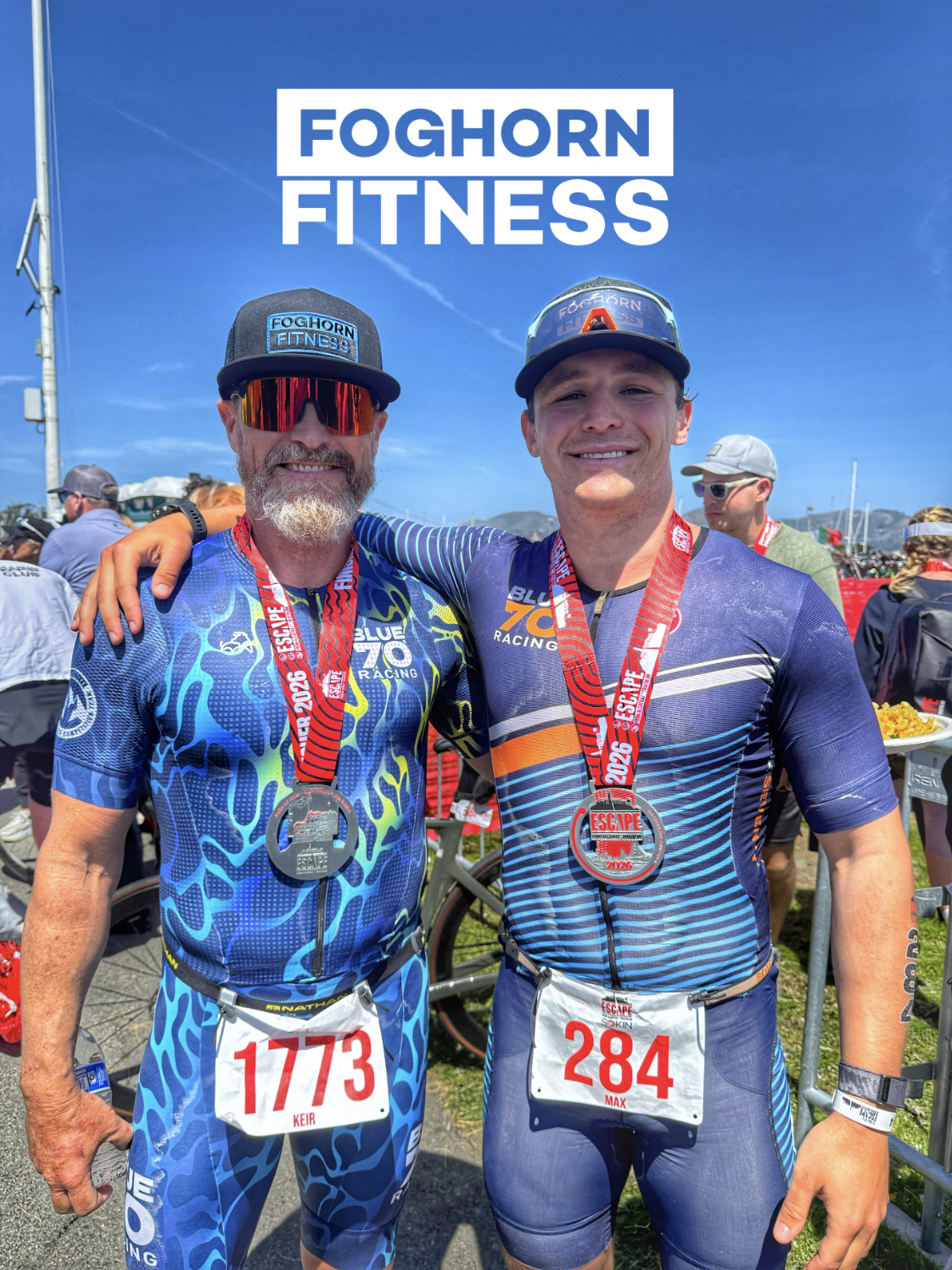
P.S. Speaking of walking, did a fair amount of that up the infamous Baker Beach Sand Ladder this past weekend during the 2026 Escape from Alcatraz Triathlon. Congrats, too, to Foghorn athlete (and eldest son) Max Beadling on his first triathlon (and on absolutely smoking his dad).

P.P.S. New website, new merch! Please have a look at the latest & greatest Foghorn website and if you’re interested in a new Foghorn hat (blue on black logo pictured above), let me know!